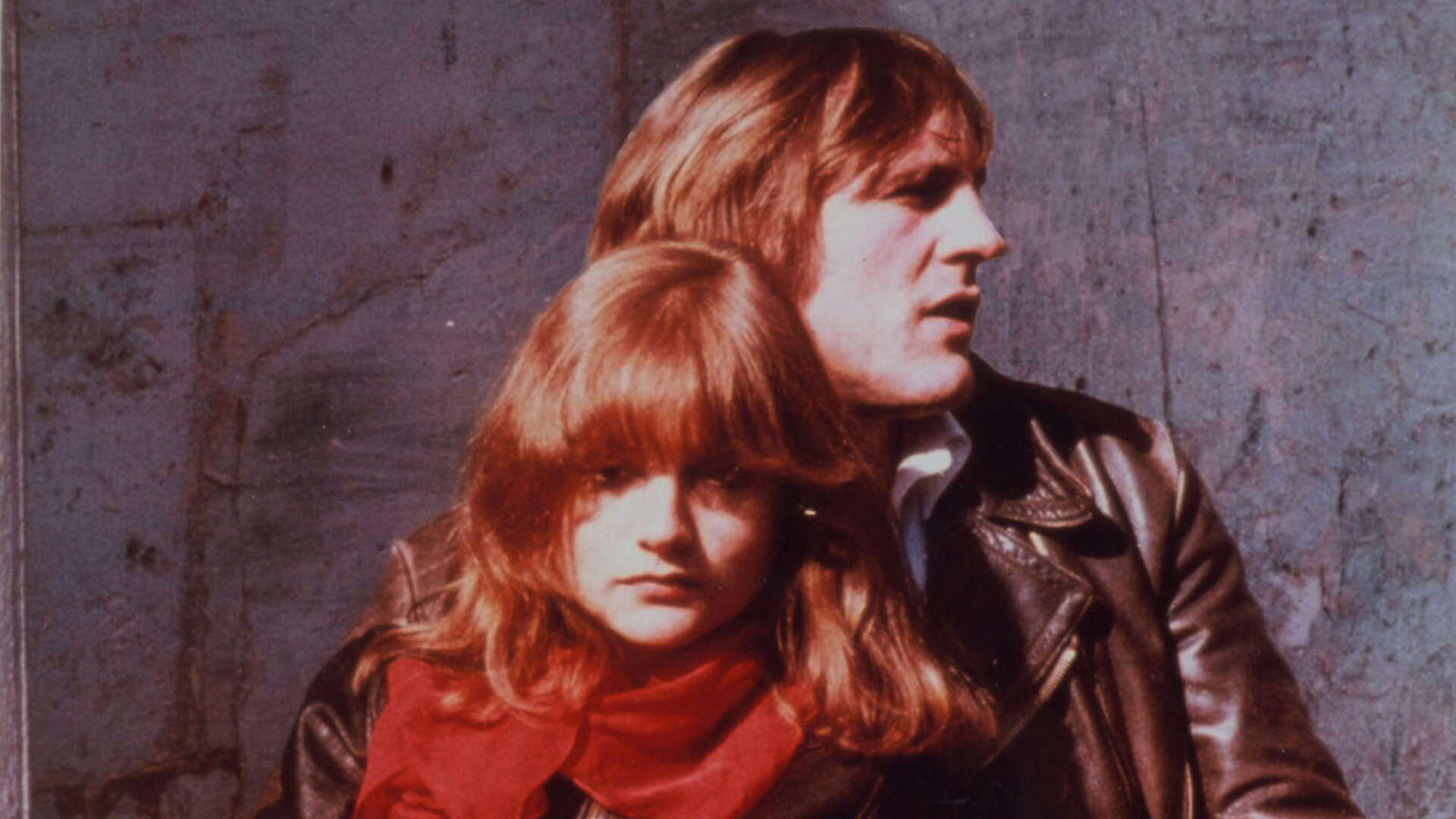
July 10–August 12, 2026
Love Will Tear Us Apart: Maurice Pialat 101
“One of the greatest, most influential, and most misunderstood modern directors.”
Richard Brody, The New Yorker
In 1998, Cahiers du cinéma convened a meeting of rising directors—those of the critics-coined “le jeune cinéma français” (Young French Cinema) movement—to discuss the influence of the French New Wave on their return to a more personal, reality-embedded approach to filmmaking following the high-gloss studio slickness of the cinéma du look era. The takeaway, already apparent but nonetheless significant to name aloud, was inspiration drawn not from the nouvelle vague at all, but a standalone figure who surfaced when the Wave had all but flattened. “For a lot of younger filmmakers of the ’90s, Maurice Pialat was the reference,” reflected Olivier Assayas in 2019. “Possibly even more so for the generation after mine.” Yet Pialat’s clout at home can, at times, be frustratingly misaligned with the more muted, or sequestered, appreciation of his work elsewhere. That the director isn’t more readily known, despite his discernible fingerprint on the past quarter-century of French cinema, is a project retrospectives like this aspire to set right.
Pialat (1925–2003) was, in fact, of the same generation as the “Young Turks” of the New Wave (a tad older, even). After a painting career failed to catch fire, he turned to filmmaking—shorts and TV documentaries—at around the same time Breathless was reshaping France as the epicentre of cool. But his debut feature wouldn’t materialize until 1968, Pialat by then already in his 40s. Though L’enfance nue was produced by François Truffaut and intimated a circling back to the director’s own lost-youth debut The 400 Blows, the film was tantamount to a declaration of independence, a severing of the self-consciously cinephilic mode of auteur filmmaking that had defined the preceding era. (Pialat made no bones about his resentment of the New Wave: “They never had the necessary ruthlessness to truly become artists.”)
Savage honesty, uncomfortable immediacy, and the rejection of stylistic artifice are the hallmarks of Pialat’s work. Intimate and remarkably unsentimental, it tends to focus on the emotional traumas precipitated by life’s trials and transitions: adolescence, the end of relationships, family turmoil, death, crises of faith. His approach to narrative, given to elisions and discontinuities, strives for a directness and truthfulness of expression and experience uncommon in contemporaneous cinema, dispensing with the orthodox exposition that typically introduces characters, provides context, or marks the passage of time. (There is a “profound respect,” writes Dave Kehr, in Pialat’s refusal to “lead his public by the hand.”) His approach to character is unfailingly non-judgemental, and his feeling for the intricacies of gesture, setting, milieu, and social class reveals great sociological subtlety. Much of Pialat’s unsparing cinema is heavily autobiographical, exorcising events from his life onscreen. He also frequently appears as an actor in his own work.
Directors as varied as John Cassavetes, Ermanno Olmi, Robert Bresson, and Jean Renoir have all been cited as touchstones for Pialat’s practice, and his name is sometimes bracketed with other post-’68 French artists of autofictional inclination (Jean Eustache and Philippe Garrel, for instance). But the battered humanism of his work, the tenderness he exhibits for even the ugliest of characters, motivated by forces unknown even to themselves, feels truly singular.
By all accounts a cantankerous, contentious, and difficult man, he was unpopular among his colleagues (“The people who make films today in France should cover their faces in shame,” Pialat declared), and upon receiving the Palme d’Or for Under the Sun of Satan to a chorus of jeers at Cannes, responded: “You don’t like me? Well, I don’t like you either.” His actors suffered the ire of his antagonism too. Gérard Depardieu, exasperated by Pialat’s volatile behaviour on Loulou, continued their collaboration only after recognizing the merits of his madness in the finished product; Sophie Marceau, following a fraught production on Police, vowed never to work with him again. (Her decision was also informed by on-set sexual misconduct by co-star Depardieu.) Though his bellicose methods may be inexcusable, there is no contesting that Pialat has yielded some of the French cinema’s greatest performances.
Pialat died in Paris in January 2003 of kidney failure after a prolonged illness. His irascible self to the end, when he was asked, in the year before his death, to assess his legacy as an artist, he responded, “Posterity can shove it for all I care.”
This major retrospective, arriving just on the other side of Pialat’s centenary last year and just over 20 years since our last, includes all ten of the uncompromising director’s feature films, as well as the Vancouver premiere of the newly restored La maison des bois, Pialat’s seven-part TV series that many herald as his magnum opus.
“Of his features, three—We Won’t Grow Old Together, À nos amours, and Van Gogh—are among the finest films made in France or any other country in the last half century, and the rest aren’t far behind.”
Kent Jones, Film Comment
“Maurice Pialat’s stark, unsentimental films left a mark on French cinema that arguably outweighs even that of the nouvelle vague.”
David Thompson, Sight and Sound
“The most important French filmmaker since Robert Bresson … Alongside any of Pialat’s features, most movies look hollow and false.”
Frédéric Bonnaud, Film Comment
Presented with the support of the Institut français du Canada

List of Programmed Films
| Date | Film Title | Director(s) | Year | Country |
|---|---|---|---|---|
| 2026-Jul | L’enfance nue | Maurice Pialat | 1968 | France |
| 2026-Jul | Graduate First | Maurice Pialat | 1978 | France |
| 2026-Jul | La maison des bois | Maurice Pialat | 1971 | France |
| 2026-Jul | We Will Not Grow Old Together | Maurice Pialat | 1972 | France |
| 2026-Jul | The Mouth Agape | Maurice Pialat | 1974 | France |
| 2026-Jul | Police | Maurice Pialat | 1985 | France |
| 2026-Jul | À nos amours | Maurice Pialat | 1983 | France |
| 2026-Jul | Loulou | Maurice Pialat | 1980 | France |
| 2026-Jul | Under the Sun of Satan | Maurice Pialat | 1987 | France |
| 2026-Aug | Van Gogh | Maurice Pialat | 1991 | France |
| 2026-Aug | Le garçu | Maurice Pialat | 1995 | France |