May 21–June 28, 2026
Love, Sex, Religion, Death: The Complete Films of Terence Davies
“Davies created films that glide on waves of contemplation and observation, inviting viewers to join him in the burnished darkness of a past about which he felt complex, contradictory feelings … Arguably, he doesn’t have imitators; no one would dare.”
Michael Koresky, Sight and Sound
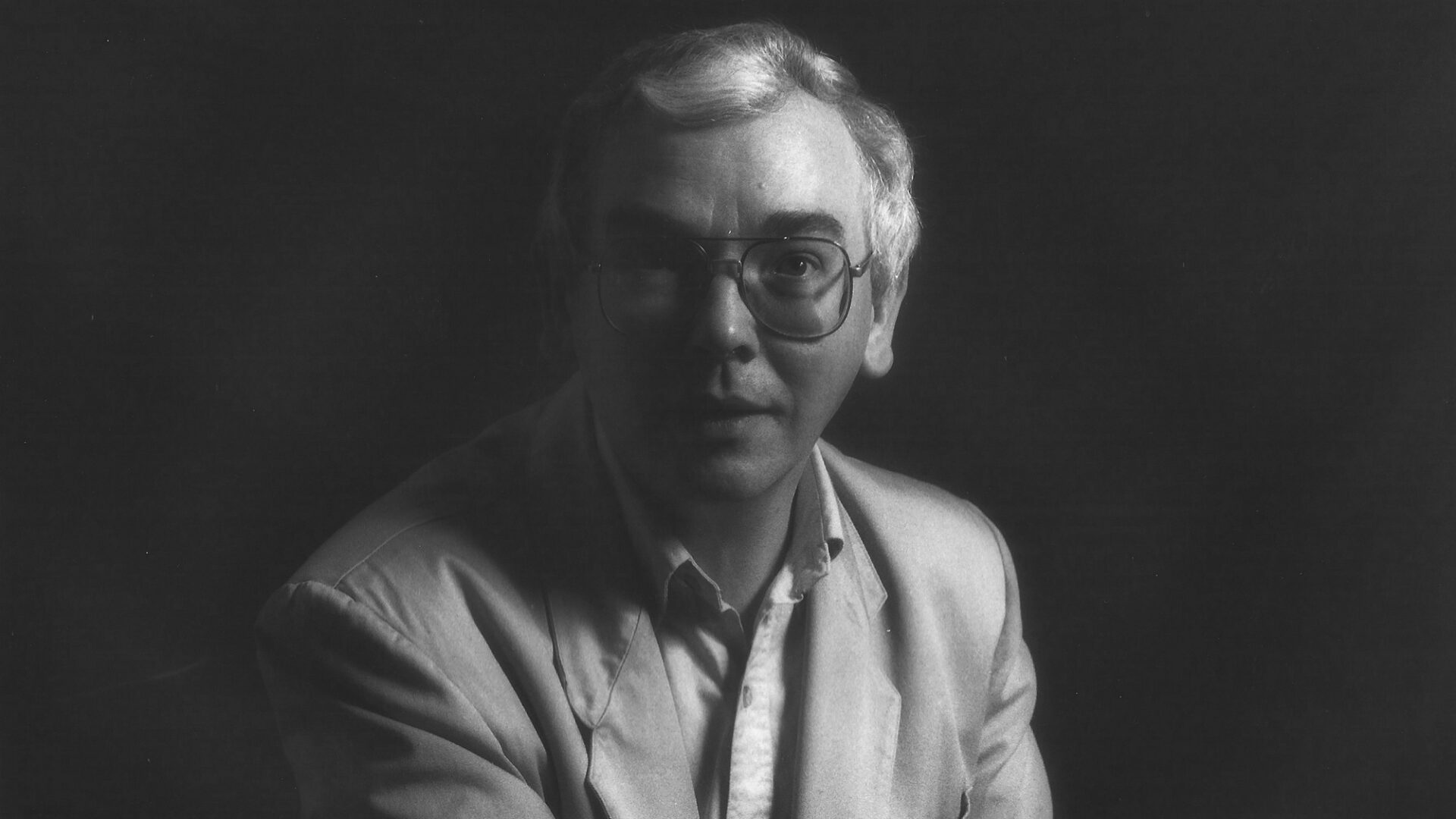
When Terence Davies died in 2023, the timing felt cruel. Few filmmakers have been as detailed in their approach to time, mortality, and the predictive powers of cinema. His first trilogy of shorts foretell the eventual death of Davies’s alter ego; his two final films, both biographies of poets, depict the artists’ loss of health and vitality. And yet, Davies’s filmmaking was in full bloom. After an unfair lacuna in his career that lasted the entirety of the 2000s, the British filmmaker leaped from project to project, making three features in six years. In the year before his death he had successfully toured Benediction at festivals and shared news of his attempts—so far stymied but perhaps with hope ahead—to get an adaptation of Stefan Zweig’s The Post-Office Girl off the ground. His death was a loss felt deeply; for an artist like Davies, who paid nothing but close attention to what time robs, the moment felt both evocative and regrettable.
Davies leaves behind a filmography with multiple masterpieces; he is sometimes called the greatest British filmmaker of all time. At the same time his work has experienced forms of neglect, and he had to fight hard for recognition, especially in his own country. Born in 1945 as the youngest of ten children to a working-class family in Liverpool, his outsider status is both what makes his films so ardently defended by critics and audiences, and what made his reputation within official British culture so precarious. A Sight and Sound notice led the wave of local mixed reviews toward The Long Day Closes, his last and arguably finest fictional treatment of his own childhood. The BFI’s list of “The Greatest” British films of all time has just a single Davies title, ranked in the mid-eighties.
Davies came to filmmaking relatively late after a decade working as a clerk and accountant. The sudden success of his first feature, Distant Voices, Still Lives, an award winner at Locarno and Cannes, happened in the wake of Thatcher’s Films Act of 1985, which ensured that personal, artistic films in England that might commit the sin of unpopularity—like in the cases of Derek Jarman, Peter Greenaway, and Sally Potter—would have fewer avenues to getting made. This close-minded and inhospitable environment—every Davies project was a struggle to fund thereafter—killed potential films, leaving only eight fiction features over 33 years.
Yet this endangered quality of Davies’s cinema only reinforces the subject of his work. Through both a visceral intimacy and intellectual remove, Davies explores what it means to live a highly limited existence. Even in his literary adaptations, Davies often works in a register of autobiographical directness. He started to make films only after leaving Liverpool and following the decriminalization of homosexuality in England, but one could say all his films are about the binds of that earlier time. Like Ernst Lubitsch or Hou Hsiao-Hsien, even works set in the present (or future) are period pieces, and confront the problems inherent in conceptualizing a time as being “past.”
Few film directors have better understood—and pursued in ways completely unfashionable—the way damnation can co-exist with the mercy of art’s initiation: Bruckner’s symphonies, Eliot’s Four Quartets, the grand shelter of growing up with eight cinemas within walking distance, and the warm echoes of common songs via radio, neighbours, sisters, and mother. There is a powerful vitality within Davies’s work. Violence, economic ruin, and bullying are amassed against Davies’s characters, but these repressive forces are rendered strange by their proximity to raw emotions and delicate, precisely rendered traversals across memory and time. Above his writing desk, Davies displayed two film posters: the Doris Day vehicle Young at Heart, and Ingmar Bergman’s Cries and Whispers. One could say his cinema oscillates between these modes, of singing ecstasy and silent debilitation.
Davies was open to chance on set, and sensitively directed many actors, most notably Rachel Weisz, Gillian Anderson, and Cynthia Nixon, to perhaps their greatest performances. Above this, however, was the filmmaking process as a highly controlled arena where Davies could, as many collaborators have put it, “conduct” a film out of collage-like pieces of his favourite films and poems, his own experience, and the artists who, in adapting their lives or works, he would assimilate into his own voice.
This retrospective, the first in Vancouver, follows a tour stop at TIFF Cinematheque and an initial mounting at the BFI in London. “Love, Sex, Religion, Death: The Complete Films of Terence Davies” gathers together the director’s feature-length works, in all their economy and grandeur, and will include a video introduction from Florian Hoffmeister, “one of the great cinematographers,” in Davies’s words, who shot The Deep Blue Sea and A Quiet Passion.
“Fiercely literate and independent … If any filmmaker blows assumptions about [working-class] British cinema out of the water, it’s Terence Davies.”
Dave Calhoun, Time Out
“Davies, like many great artists, is obsessed with how we might repurpose cinematic artifice and Hollywood’s Golden Age. Yet he fails to share the macho delight directors like Godard, Scorsese, and the like have for ripping the history of cinema from its original context … Cinema is not to be dallied with, looted for a shot or costume idea, but sanctified as an essential part of a master’s ongoing heartbreaking exploration of the resilience and fragility of the human condition.”
Noah Cowan, Cinematheque Ontario
“The past is not a foreign country; it lives within us. In a second, you can be back forty years. Smell grass, I’m immediately back in my primary school. You hear a song, you’re immediately back twenty-odd years ago. It’s very, very potent … The problem with cinema is awesome: it’s always in the eternal present. When you cut, it’s always assumed by the audience that this is the next thing that happened.”
Terence Davies
Acknowledgments
For their assistance with this retrospective, The Cinematheque would like to extend thanks to the Terence Davies Estate and its managers James Dowling and John Taylor, as well as Amanda Brason, Jacob Crepeault, and Vicky Wong (TIFF Cinematheque), and Selma Kerlow and Sebastian Stern (BFI).
This retrospective is based on a program of the same name that was curated at BFI Southbank by Ben Roberts, BFI chief executive.
Media
List of Programmed Films
| Date | Film Title | Director(s) | Year | Country |
|---|---|---|---|---|
| 2026-May | The Long Day Closes | Terence Davies | 1992 | United Kingdom |
| 2026-May | The Deep Blue Sea | Terence Davies | 2011 | United Kingdom |
| 2026-May | The Terence Davies Trilogy | United Kingdom | ||
| 2026-May | Distant Voices, Still Lives | Terence Davies | 1988 | United Kingdom |
| 2026-May | The Neon Bible | Terence Davies | 1995 | United Kingdom . . . |
| 2026-May | The House of Mirth | Terence Davies | 2000 | United Kingdom |
| 2026-May | Of Time and the City | Terence Davies | 2009 | United Kingdom |
| 2026-Jun | Sunset Song | Terence Davies | 2015 | United Kingdom . . . |
| 2026-Jun | A Quiet Passion | Terence Davies | 2016 | United Kingdom . . . |
| 2026-Jun | Benediction | Terence Davies | 2021 | United Kingdom |
Note
Terence Davies’s only published novel Hallelujah Now (1984), now re-issued in a hardback edition that includes a selection of Davies’s original poetry, will be available for sale at our box office throughout the retrospective.