Immediate Experience: Early Films by Bahram Beyzaie & Amir Naderi
- Bashu, the Little Stranger
- باشو غریبهٔ کوچک
- Iran1986
- Bahram Beyzaie
- 122 DCP
- PG
- Immediate Experience: Early Films by Bahram Beyzaie & Amir Naderi
Screening Dates
- September 3 (Thursday) 7:00
- September 6 (Sunday) 8:40
- September 26 (Saturday) 6:00
- September 28 (Monday) 8:50
“His finest post-revolutionary film … Beyzaie masterfully links the fragmentation of national identity to language and the failures of communication.”
Ehsan Khoshbakht, The Guardian
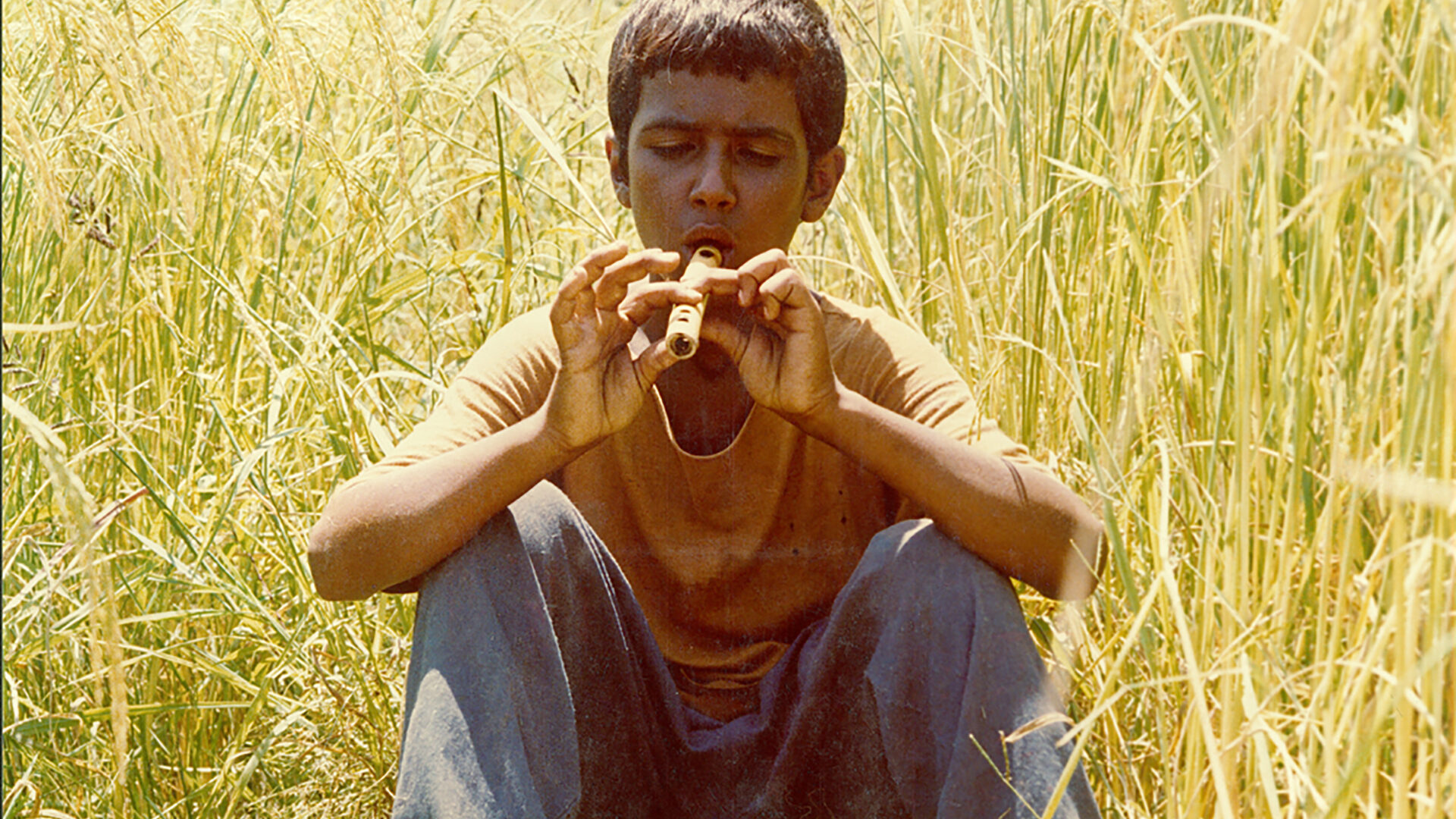
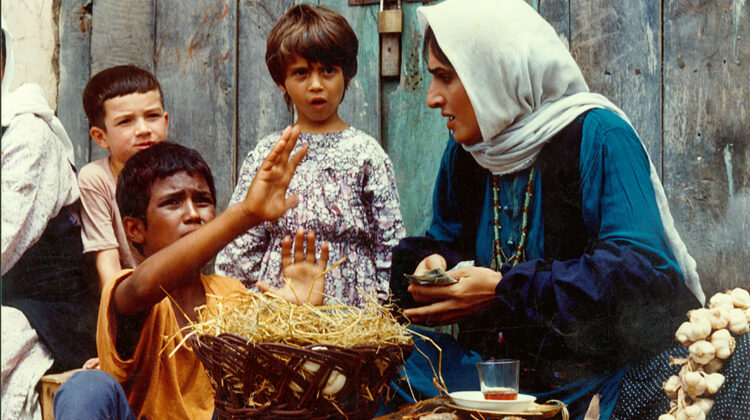
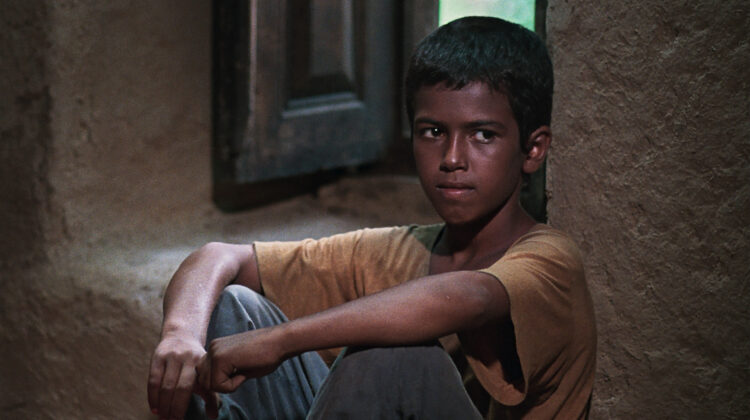
Bahram Beyzaie made his masterpiece during the height of the Iran–Iraq war. An anti-war film that completely destabilizes the hardened positions of nationality and authority, Bashu, the Little Stranger was banned until the war was over. It is neither didactic nor sentimental, yet Bashu is instructive and powerfully persuasive in harnessing Beyzaie’s art, rooted in theatre and ancient culture, toward that most contemporary of subjects: the cost of modern warfare. Bashu is a war orphan in rural northern Iran; he is adopted by Naii (the great Susan Taslimi), a single mother of two, out of necessity and a shared recognition of their intense drives toward life at all costs. Villagers turn against her. They accuse her of confusing friends and enemies, and Bashu doesn’t speak their language. Beyzaie turns Naii’s yard into a ceremonial space, emphasizing through sound and gesture how “understanding” and “conflict” are rooted in and enacted by something animal within the human.
In Gilaki, Arabic, and Farsi with English subtitles
The opening-night screening on September 3 will be introduced by filmmaker and editor Sam Mohseni, whose graduate studies focused on the cinema of Beyzaie.
Best Restored Film
Venice International Film Festival 2025
“Beyzaie’s cinema can thicken an image quickly with cultural resonance—ritual, myth, collective memory—and in Bashu that density often deepens the film’s emotional impact.”
Arta Barzanji, Metrograph Journal
“Beyzaie interlocks shots in ways that are always unexpected, much like Max Jacob would end his sentences with [a] jolt … The film is a masterpiece in which its form is an exploration of love ‘edited’ by a woman and a child who invent a metalanguage and save each other’s lives in turn.”
Sylvain Coumoul, Cahiers du cinéma
“It is now exactly 40 years since the filming of this work … At that time, any word that did not glorify the war was met with threats and was strictly forbidden … Today, with the utmost humility, I pay tribute to all the innocent victims of that senseless eight-year conflict, and I call down a curse upon all profiteers of every war.”
Bahram Beyzaie
Media
Note
Sam Mohseni is an Iranian Canadian filmmaker, film editor, and emerging film scholar based in Vancouver. He holds a Master of Fine Arts in Film Production from the University of British Columbia and a Master of Arts in Cinema and Media Studies from York University. His films explore themes of immigration, identity, and diaspora. His research at York focused on the cinema of Bahram Beyzaie, examining the effects of the 1979 Iranian Revolution on the aesthetics of Iranian cinema and the new modes of filmmaking that emerged to circumvent censorship surrounding the portrayal of women protagonists in Beyzaie’s films.